Commercial floor sanding in New Southgate, N11
In New Southgate, a shop floor beside Friern Barnet Road or an office entrance near the station can wear through its protective seal long before the rest of the room looks tired. Grit cuts into the timber, chair castors expose bare patches and repeated cleaning leaves dark edges where moisture gets beneath the finish. Commercial floor sanding needs to tackle that damage around your opening hours, with a clear plan for repairs, dust control and reopening.
Our approach to Commercial Floor Restoration in New Southgate starts with what is failing beneath your feet. Loose parquet, worn lacquer and cleaning-product build-up need different treatments; sanding everything back is not always necessary. Planned Commercial Floor maintenance in New Southgate can preserve a sound finish before foot traffic reaches the wood.
If the coating remains intact, ask about Commercial Floor Polishing in New Southgate and whether cleaning, compatible maintenance treatment or an adhesion-tested recoat is appropriate. Polishing will not secure a rocking block or repair a worn-through seal. Call 0800 335 7565 to discuss the floor, your trading hours and the time available for the finish to harden.
Sector-specific challenges and structural wear
New Southgate has an awkward mix for commercial floor work: Victorian conversions, the early twentieth-century shopping parade on Friern Barnet Road and modern business premises towards the industrial estate. Near Arnos Grove, customer-facing units sit within a busy residential neighbourhood. Narrow access, shared entrances and neighbours above the premises can dictate when machinery runs and where materials are unloaded.
A finish that copes in a sitting room may struggle beneath office chairs, stacked school furniture or café tables dragged across the same boards every evening. Off-the-shelf polish can leave residues that interfere with a later lacquer coat, and a brighter sheen proves nothing about grip. The specification must suit the traffic, spillages and actual cleaning routine.
- Private offices, coworking and serviced offices: castor tracks, grit beneath desks and movement around floor boxes; repairs must respect cables and access panels.
- Shops, boutiques, showrooms and shopping-centre units: concentrated entrance wear, display-unit loads and delivery wheels; centre management may control access, noise and waste removal.
- Restaurants, cafés, pubs and takeaway units: grease, drink spills and unsuitable degreasers can compromise grip or the coating; timber suitability must be checked separately in food-preparation and wet-cleaned areas.
- Factories, workshops, manufacturing units, storage units, distribution centres and delivery depots: assess existing timber for loading and contamination; sanding cannot turn it into a forklift-rated industrial floor.
- Gyms, cinemas, event venues and studios: impact damage, seating fixings and concentrated routes need attention; sprung sports floors require a compatible specialist system.
- Hotels, hostels and serviced accommodation: luggage wheels and housekeeping schedules affect both finish choice and access; guest routes must remain safely separated.
- Clinics, dental practices and treatment rooms: open joints trap dirt, while disinfectants can attack an unsuitable finish; agree cleanability and chemical compatibility with the practice manager.
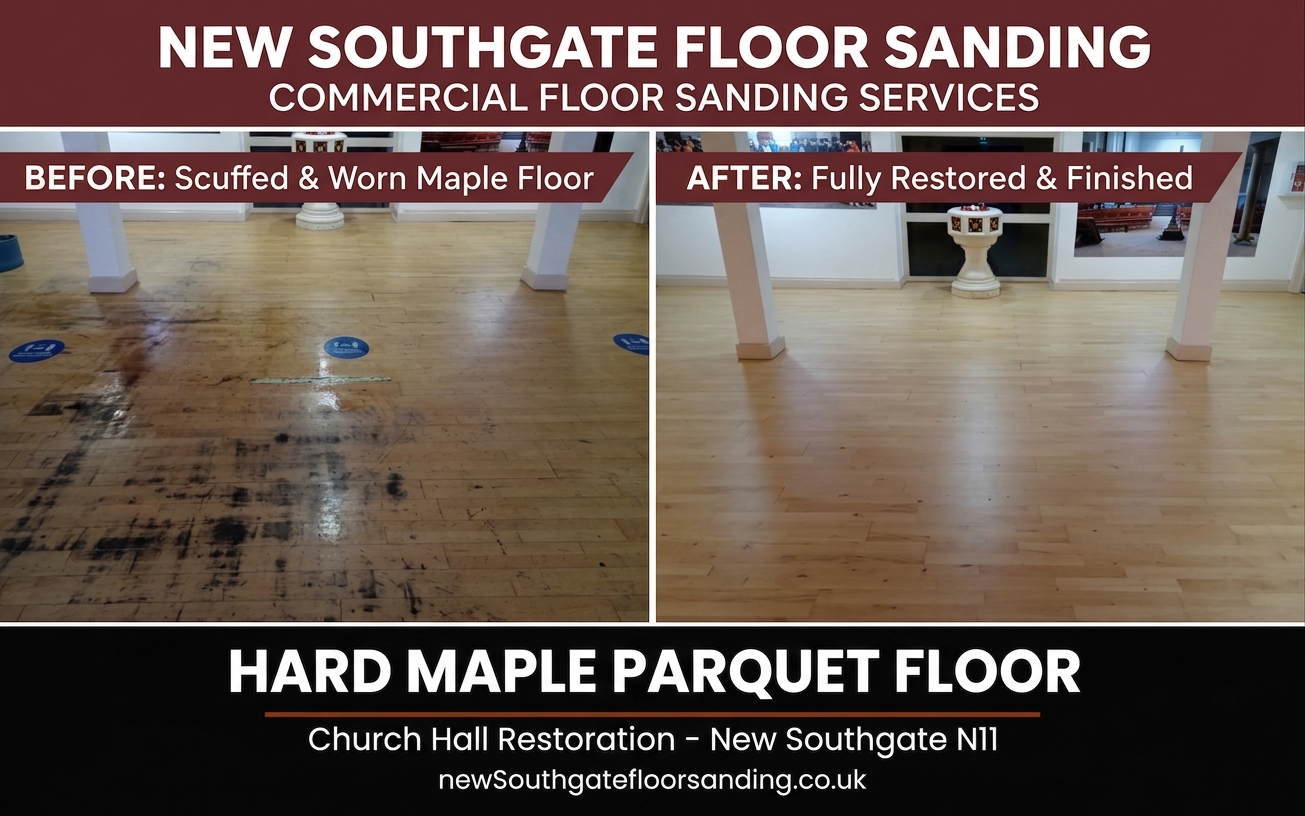
- Schools, colleges, universities, academies, churches, mosques and temples: term dates, services, prayer times and furniture movement shape the programme; loose blocks and raised edges need repair before cosmetic work.
Across these buildings, dirt-filled gaps, protruding fixings and moisture entering at thresholds deserve attention first. A hollow-sounding block suggests a bond worth investigating; a cupped board calls for moisture checks. Neither problem is solved by another coat of lacquer.
The commercial restoration process, step by step
Step 1: Subfloor audit and moisture testing
First establish the construction: solid boards on joists, parquet bonded to a screed or engineered flooring with a limited wear layer. Check remaining timber above tongues and fixings, previous sanding, local deflection and the condition beneath loose sections. Identify the species rather than guessing from the stain: quartersawn oak, resinous pitch pine and oily teak need different preparation decisions.
Record timber moisture with a suitable calibrated meter, alongside room temperature and relative humidity. Where a mineral subfloor is accessible, use the appropriate hygrometer checks and allow readings to equilibrate; a quick surface reading is not a substitute for testing the substrate. Compare the results with the selected adhesive and coating requirements, and resolve leaks or persistent damp before closing the floor up.
Step 2: Timber repairs, re-bonding and resin gap-filling
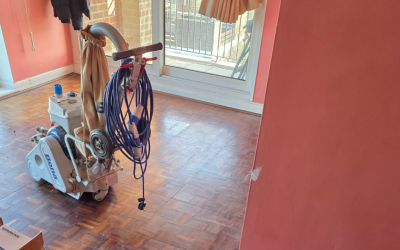
Secure moving boards and replace failed timber with material matched for species, dimensions and grain. Lift loose parquet carefully, prepare the substrate and select silane-based flexible parquet adhesives where suitable for the timber, substrate and expected movement. Old adhesive residues need assessment before disturbance; a new adhesive is not automatically compatible with what remains underneath.
Resin-slurry gap filling combines an appropriate binder with clean, fine sanding dust from compatible timber. It suits small, stable joints within the filler manufacturer’s limits; wide or moving board gaps may need fitted timber slivers, replacement boards or another repair detail. Leave designed expansion joints functional: filling them solid can create a more expensive problem later.
Step 3: HEPA dust-controlled sanding and surface preparation
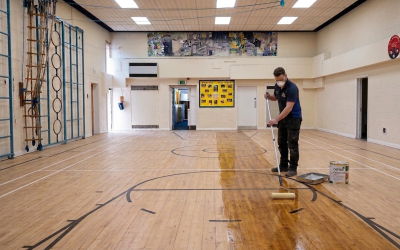
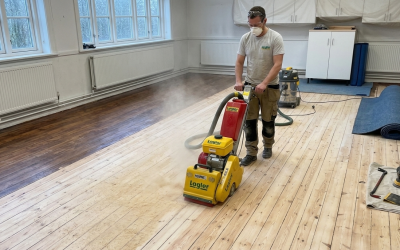
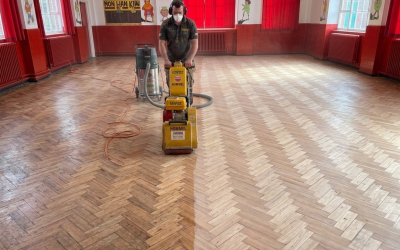
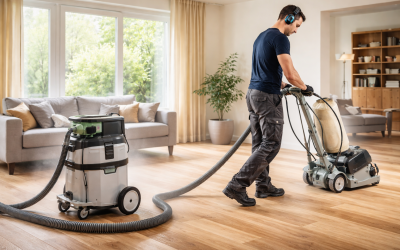
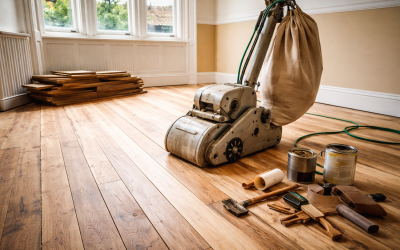
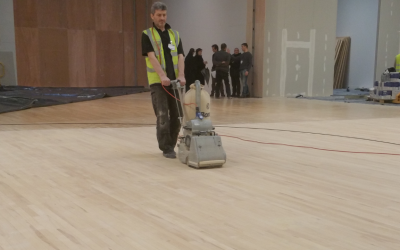
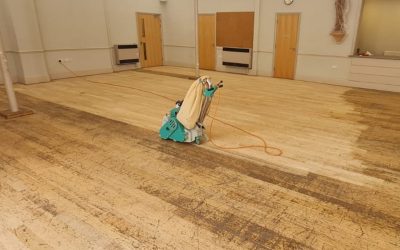
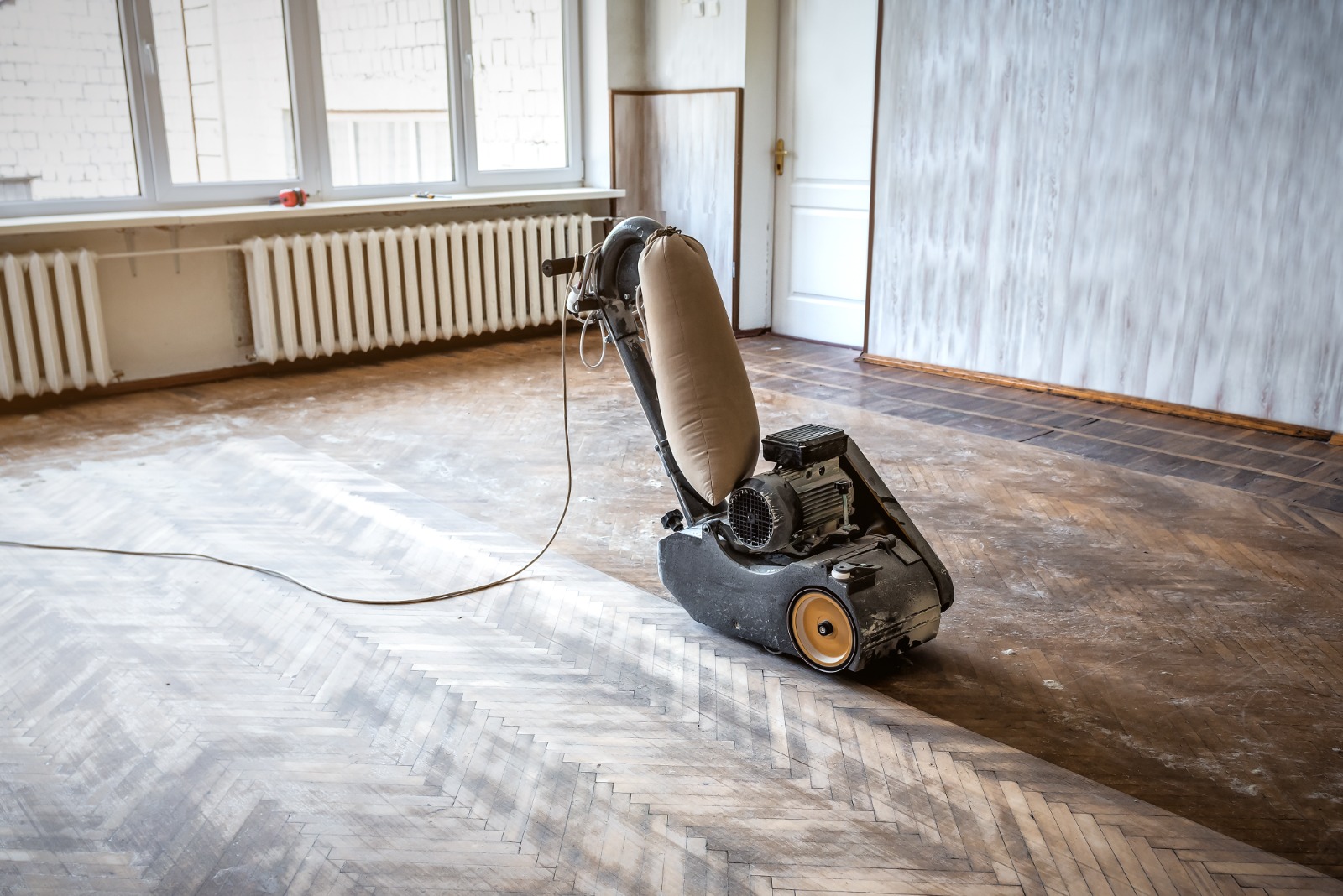
The machinery specification can include Lägler Hummel belt sanders for the main field, with edging and finishing equipment selected for the layout and parquet pattern. Choose the starting abrasive to remove the failed coating without taking unnecessary timber, then work through a controlled sequence. Check under low-angle light for belt marks and edge scratches before any finish goes down.
Specify suitable on-tool extraction and an appropriately rated M- or H-class extraction unit for wood dust. Where HEPA H14 dust extraction is specified, verify the complete equipment arrangement: an H14 filter designation alone does not establish the machine’s dust class. Dust control also means screened work zones, vacuum cleaning and suitable respiratory protection; it does not mean an occupied room can remain open beside active sanding.
Agree site-specific RAMS documentation before work, covering access, segregation, noise, electrical supplies, fire routes and waste handling. COSHH assessments must address wood dust, adhesives, fillers, finishes and cleaning chemicals, using the relevant safety data sheets. Coordinate any alarm-system precautions with the responsible site manager and preserve fire protection throughout.
Step 4: High-traffic finishes: 2K lacquers, hardwax oils and anti-slip coatings
For suitable busy interiors, 2K waterborne polyurethanes use a separate hardener with cross-linking catalysts or reactive cross-linkers, as specified by the manufacturer, to develop the cured film’s resistance. Measure the mixing ratio, respect the pot life and apply the stated coverage and coat sequence. Extra hardener or an excessively thick coat is not a shortcut to durability.
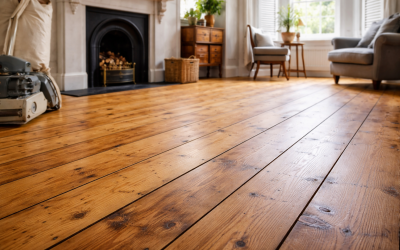
Hardwax oils can suit timber where appearance and maintainable local repairs matter, provided the occupier accepts the cleaning and renewal regime. Teak and other oily species need a preparation and primer system approved for that substrate. For adhesives and other eligible materials, request documented EC1 Plus low-VOC emission ratings where specified; this is a product emissions classification, not proof that every product on the job is harmless.
Anti-slip coatings need a specification tied to the actual exposure, including water or tracked-in contamination. Older reports may cite BS 7976-2 Pendulum Slip Resistance testing, but that standard is withdrawn; specify testing to the current BS EN 16165 pendulum method and record the test conditions. A dry result or an “anti-slip” label does not establish performance on a wet entrance floor.
Foot-traffic release and full cure are separate milestones. For example, Bona Traffic HD literature permits full traffic after 12 hours under its stated conditions; that timing cannot be transferred to another coating or a cold, poorly ventilated room. The agreed handover must state separate times for walking, furniture replacement, rugs and wet cleaning, based on the exact product and site conditions.
Step 5: Aftercare and maintenance protocols
Give the cleaning team a written routine: remove grit, use the finish manufacturer’s approved cleaner at the stated dilution and keep washing water controlled. Avoid steam cleaning and unapproved polish; fit suitable furniture protection and keep entrance matting clean. In clinics and food-service premises, check the required disinfectant or degreaser against the coating before making it part of the routine.
Inspect entrances, chair positions and service routes more often than lightly used corners. Recoat while the protective film remains serviceable, subject to compatibility and adhesion checks, rather than waiting for grey timber to appear. Record the coating system and application date so the next maintenance visit starts with facts.
Commercial logistics: arranging work around your facility
Book the closure around the complete job, including repairs, adhesive setting and coating cure. An overnight slot may suit maintenance, but a full restoration can need several shifts and a protected curing period. Agree keys, security, loading, furniture clearance and the last permitted noisy operation before fixing the programme.
| Working shift | Operational benefit | Facility suitability |
|---|---|---|
| Overnight | Moves suitable work outside trading hours; reopening follows the specified cure window, not simply the end of the shift. | Offices, retail units and selected café areas where access and permitted noise hours allow. |
| Weekend phased | Groups preparation and coating into a longer closure, with contingency for repairs and slower drying. | Clinics, serviced offices and teaching buildings with confirmed weekend access. |
| Sectional | Separates work into rooms or defined zones while maintaining agreed escape and circulation routes. | Hotels, studios, worship buildings and larger premises with genuinely separable areas. |
Sectional working needs sensible boundaries, usually doorways or existing breaks in the floor. Coating half an open hall can leave a visible join, while moving customers across a freshly finished section defeats the programme. Where safe segregation is impossible, plan a full closure.
A clear quotation and evidence your site manager can check
Start with photographs, a short video and a floor plan showing approximate dimensions, damaged areas and entrances. These support an initial assessment; a physical site survey establishes timber condition, access and the repair scope before the final quotation. Use the floor sanding prices page for budget guidance, then have your commercial specification priced against the surveyed floor.
The written scope should separate repairs, preparation, the named finish system, furniture handling, out-of-hours working and any testing. It should identify VAT treatment, exclusions and how concealed defects or additional work will be agreed. Browse the floor restoration gallery to discuss timber colour and sheen, then approve a sample on your own floor where appropriate.
Ask for evidence of CSCS-carded staff where your site requires them, with cards appropriate to the work undertaken. Request current commercial liability insurance documentation, including public liability cover, relevant limits and any exclusions affecting your premises. Keep those checks alongside RAMS and product information so your facilities team can assess the proposed work before granting access.