How Virtually Dust-Free Floor Sanding Really Works in New Southgate Homes
If you still picture floor sanding as a thick cloud of dust rolling through the house, you are thinking of outdated equipment, not modern restoration. At New Southgate Floor Sanding, today’s process is built around professional dust-extraction systems, controlled grit progression, careful room preparation, and high-performance finishing products that make wood floor restoration cleaner, quicker, and far more practical for busy households in North London.
For many homeowners in New Southgate, Arnos Grove, Friern Barnet and the surrounding N11 area, that matters just as much as the final look. They want beautifully restored timber, of course, but they also want to know whether the job will cover skirtings, radiators, curtains, shelves and soft furnishings in fine dust. The honest answer is this: no credible specialist should promise literally zero dust, but modern wood floor restoration in New Southgate can be carried out with extremely effective dust control that is a world away from the mess associated with older sanding methods.
In this guide, we will explain what “virtually dust-free” really means, how the technology works, why equipment quality matters, where limitations still exist, and how the right sanding and finishing system helps protect both your home and your investment.
The short answer: modern floor sanding is dramatically cleaner than old-fashioned methods
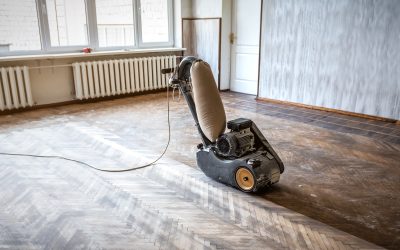
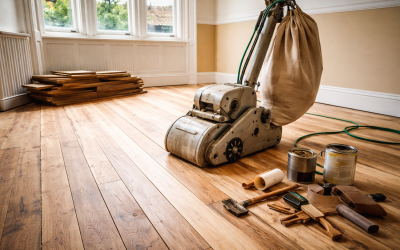
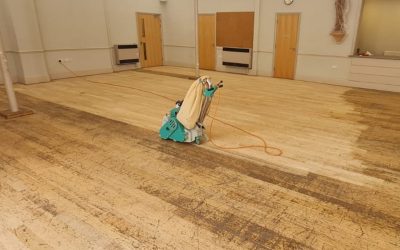
Traditional sanding systems from decades ago often allowed huge volumes of airborne dust to escape into the room. Modern professional machines are very different. They are designed to capture dust at source, directly from the sanding drum, belt, edger or buffer, before it has the chance to spread widely through the property.
That is why the phrase virtually dust-free is the honest one. It reflects real improvement without making a misleading absolute claim. In practical terms, a well-managed sanding project today should leave your home vastly cleaner than the horror stories many people still remember or hear from older renovations.
It is also one reason why more homeowners now choose restoration over replacement. If your boards are structurally sound, professional sanding, repairs and refinishing can transform the floor you already have without the cost, waste and upheaval of ripping everything out.
Why the “dusty sanding nightmare” image still exists
The reputation comes from genuine past experience. Older drum sanders often relied on basic cloth bags with limited containment. On worn Victorian pine, parquet, strip oak or painted boards, they could release enormous amounts of fine particulate dust into the air. Once airborne, that dust travelled everywhere: onto skirting boards, window sills, curtain rails, furniture, wardrobes and sometimes adjoining rooms.
That legacy still affects homeowner expectations. Many New Southgate clients ask whether they will need to move out, empty the entire property, or prepare for days of heavy cleaning after the job. Those concerns are understandable, especially in period homes where original floorboards sit beneath carpets and underlay that may have trapped years of debris.
But the gap between outdated sanding and modern wood floor sanding in New Southgate is enormous. Better machine design, stronger extraction, sealed dust collection, HEPA-style filtration approaches, improved abrasives and more disciplined site preparation have all changed what clients can realistically expect.
What “virtually dust-free” really means in a professional setting
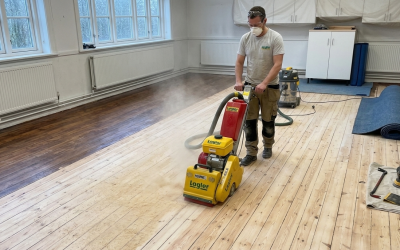
In plain English, it means most dust is captured during the sanding process instead of being allowed to circulate freely around the room. The extraction unit works continuously while sanding is taking place, pulling fine particles away from the abrasive contact point and into a sealed collection system.
That gives several real-world benefits:
- Much less airborne dust during the job
- Far less dust settling on furniture and fixed surfaces
- Cleaner transitions between sanding stages
- Better visibility for the technician while working
- A cleaner substrate before sealing or finishing
- Less post-job disruption for the homeowner
It does not mean that not a single speck of dust exists anywhere. No professional should frame it that way. There will still be a small amount of residual fine dust from movement, edging details, repairs, gap filling, emptying collection units and general site traffic. The difference is scale. Modern technology reduces the mess to a manageable, professional standard rather than an uncontrolled one.
How modern floor restoration technology controls dust
1. Extraction connected directly to the sanding machine
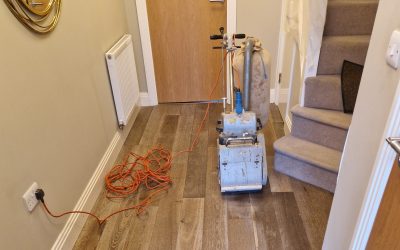
The main reason modern sanding is cleaner is simple: extraction happens at the point of contact. Whether using a belt sander on open board runs or an edging machine near skirtings, dust is pulled away as the abrasive cuts the timber. This prevents the large airborne clouds associated with older systems.
2. Better machine sealing and airflow design
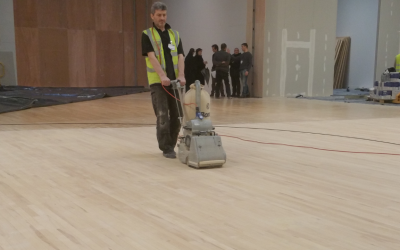
Professional-grade sanding equipment is designed so that airflow, pressure and dust capture work together. Well-maintained machines create a more controlled sanding environment, especially across larger areas such as reception rooms, hallways, through-lounges or commercial timber floors.
3. Progressive grit sequencing
Good dust control is not only about extraction. It also depends on how the floor is sanded. A proper grit sequence reduces unnecessary abrasion loading and keeps the process efficient. On many projects, professionals move through a structured sequence such as coarse, medium and fine passes rather than trying to overwork one abrasive stage. That approach improves finish quality and helps keep the sanding process stable.
4. Fine cleaning between stages
Vacuuming and surface cleaning between sanding and finishing stages matter enormously. A technically skilled contractor does not simply sand the boards and start coating. They remove dust properly, inspect the surface, carry out repairs or resin work where needed, and only then move to sealing and finishing.
5. Cleaner finishing systems
Modern finishing technology also plays a part. High-quality waterborne products such as Bona Traffic HD are popular because they offer strong wear resistance with lower odour and a more practical drying profile than many older solvent-heavy systems. For clients who prefer a more natural appearance, products such as Osmo Hardwax Oil provide a different finish character while still supporting a professional restoration system.
Why dust control matters for finish quality, not just cleanliness
Many people think dust extraction is mainly about keeping the room tidy. In reality, it also has a direct effect on the standard of the finished floor.
When excess dust remains on the surface, it can interfere with the sealer or top coat. That may reduce clarity, create roughness, affect adhesion, or leave the final appearance flatter and less refined than it should be. On premium restorations, especially in visible living spaces, the quality of preparation is what separates an average result from a genuinely high-end finish.
That matters in New Southgate homes with original Victorian boards, 1930s pine floorboards, oak strip flooring or parquet. Once the timber is fully exposed, every decision becomes visible: grit discipline, edge blending, filling strategy, surface cleaning and finish selection. Dust control is part of craftsmanship, not a marketing extra.
The floors that benefit most from modern low-dust restoration
Virtually dust-free sanding technology is useful across almost every timber floor type, but some properties benefit particularly strongly.
Victorian and Edwardian floorboards
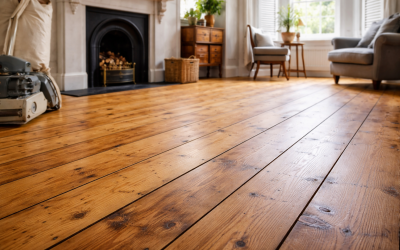
Older period homes in and around New Southgate often have original softwood boards hidden beneath carpet. These floors may show blackened edges, historic paint traces, old nail repairs, draught gaps and uneven wear patterns. Modern sanding and extraction allow them to be restored far more cleanly than many owners expect.
Parquet floors
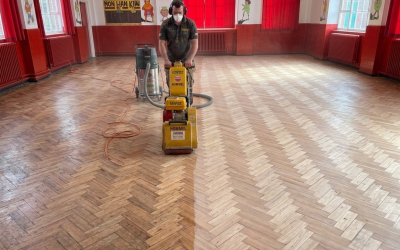
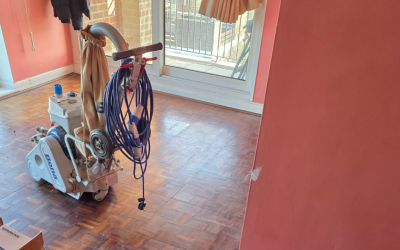
Parquet demands precise sanding technique because of grain direction changes, block movement and edge detail. Cleaner sanding helps keep the site under control while allowing the installer to focus on re-levelling, gap correction, block security and a refined finishing schedule.
Busy family hallways and living areas
High-traffic zones collect embedded dirt, grit and wear. These spaces often need more than cosmetic improvement. They need a carefully prepared, durable finish system, often supported by stronger lacquer options. If you are also weighing up costs, the live wood floor sanding cost guide on the site is a useful next read.
Commercial and mixed-use spaces
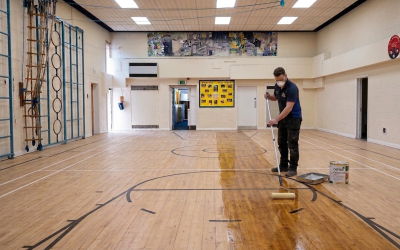
Low-dust restoration is equally valuable for shops, studios, schools and office environments where downtime and cleanliness matter. For business owners, this is one reason commercial clients increasingly choose restoration rather than replacement, as explained in the site’s guide to commercial floor sanding in New Southgate.
The limits of “dust-free” claims: what honest contractors will tell you
There is a big difference between responsible marketing and exaggerated marketing. A trustworthy floor restoration specialist will tell you the job can be carried out with extremely effective dust containment, but will not pretend that physics has stopped applying.
Small traces of dust may still appear because of:
- Edging and detailed perimeter work
- Existing dust hidden under carpets, underlay or thresholds
- Board repairs and cutting in replacement timber
- Movement of operatives, cables and tools through the property
- Bag changes or emptying extraction containers
- General renovation activity around the sanding work
That is why the best wording is virtually dust-free or low-dust floor sanding. It is realistic, professional and aligned with what clients actually experience.
How a specialist prepares your home for a cleaner restoration
Technology matters, but process matters just as much. Even excellent sanding equipment performs best when the room is prepared properly. In a well-run floor restoration project, preparation typically includes:
- Checking the floor type and overall structural condition
- Setting protruding nails below the surface
- Securing loose boards before sanding starts
- Assessing whether gaps need resin filling or timber slivers
- Protecting adjacent areas where appropriate
- Planning the sanding direction around board layout and room geometry
- Choosing a finish suited to the room’s actual traffic level
This is where experience shows. A skilled team does not simply arrive with a machine. They assess the floor as a system: timber species, moisture exposure, historic movement, existing coating, wear pattern, repair needs, and final use. That is how you get a cleaner process and a longer-lasting outcome.
Modern finishes that complete the restoration properly
Once the floor has been sanded cleanly and correctly, the final result depends on the finish system selected. For domestic projects in New Southgate, the choice usually comes down to the look you want, the maintenance level you are comfortable with, and how hard the room will be used.
Waterborne lacquer systems
These are often the preferred option for hallways, kitchens, family rooms and other harder-working spaces. They offer a clean appearance, strong wear resistance and straightforward day-to-day maintenance. The site’s own pricing page also shows an option to upgrade to high-traffic lacquer, which is especially relevant for households that want extra durability.
Hardwax oil systems
Hardwax oils appeal to homeowners who want a more natural, tactile timber look with easier local repairability in the future. They can be an excellent choice on characterful boards where preserving the warmth and visual texture of the wood is part of the brief.
Stains and colour changes
Where a client wants to shift the tone of the floor, perhaps moving old pine away from orange tones or darkening pale boards for a richer look, staining can be built into the restoration schedule. This stage requires excellent dust management and careful denibbing between coats to keep the final appearance smooth and even.
Is modern low-dust floor sanding worth it?
In most cases, yes. It makes restoration significantly more practical for occupied homes and removes one of the biggest barriers that used to stop homeowners from acting. Instead of postponing necessary work because the process sounds unbearable, clients can move ahead with a realistic expectation of a controlled, professional project.
It is also worth remembering that restoration is usually the more sustainable route. If the timber is sound enough to save, sanding and refinishing preserve the original floor, reduce waste, and often cost far less than replacement. The NWFA homeowner guidance also reflects the wider point that maintenance coats and refinishing can extend the life and appearance of timber floors over time.
Common questions homeowners in New Southgate ask
Will I need to leave the house?
Not always. It depends on the area being restored, the finish being used, site access, and your tolerance for temporary disruption. Many projects can be managed while the household remains in the property, especially when work is phased room by room.
Will dust go into cupboards and wardrobes?
With modern extraction and sensible preparation, spread is dramatically reduced compared with older sanding methods. However, any room connected to the work zone should still be treated sensibly, and a professional contractor will explain what should be cleared or protected in advance.
Is low-dust sanding safe for children and pets?
Lower dust is clearly preferable to uncontrolled dust, but sensible access restrictions still apply during sanding and finishing. Children and pets should be kept away from active work areas until the contractor confirms the room is ready for light use.
Does cleaner sanding mean weaker sanding?
No. Proper dust extraction does not make the sanding less effective. In fact, good extraction often supports better cutting consistency, clearer visibility and a cleaner surface for finishing.
Can all floors be restored this way?
Most solid timber floors and many parquet floors can. Some engineered boards can also be restored, depending on wear layer thickness and previous sanding history. A site inspection is the only reliable way to confirm suitability.
The real takeaway: technology helps, but workmanship still decides the result
Modern floor restoration technology has changed what homeowners can expect. The process is cleaner, more controlled and far better suited to lived-in properties than the old image of sanding suggests. But the equipment alone is not the full story.
The real result still depends on the person using it: how they assess the floor, set the grit sequence, handle edge work, repair defects, manage dust between stages, and match the finish system to the room. That is the difference between a floor that merely looks improved and one that feels professionally restored from the sub-surface up.
Book a cleaner, smarter floor restoration in New Southgate
If your timber floors are scratched, dull, patchy or hidden under tired carpet, modern restoration technology makes the process far less disruptive than many people expect. With the right sanding system, careful preparation and a durable finish, you can bring original boards back to life without turning the house into a building site.
To discuss your floor, request a survey or get tailored advice on finishes, repairs and restoration options, visit New Southgate Floor Sanding. Whether you need a full domestic refurbishment, parquet restoration, gap filling, or a high-durability finish for a busy family home, expert guidance starts with the right assessment.