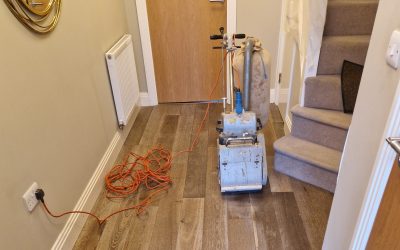
Is Restoring Old Floorboards in New Southgate Worth It?
If your timber floorboards in New Southgate are scratched, draughty, dull or hidden beneath old finishes, restoration is usually a far better long-term investment than ripping everything out and starting again. At New Southgate Floor Sanding, we regularly see original boards in N11 homes that look beyond saving at first glance, yet respond brilliantly to professional sanding, repairs, gap filling and the right finish system.
For homeowners in New Southgate, Arnos Grove and the surrounding North London area, the real question is not simply, “Can these boards be improved?” It is, “Will restoring them give me better value, better durability and better character than replacement flooring?” In many cases, the answer is yes.
Key Takeaway
Restoring existing floorboards is often the smarter financial and practical choice because it preserves original timber, avoids unnecessary removal and disposal costs, improves appearance, supports property value, and lets you choose a finish system tailored to how the room is actually used. In period and mid-century New Southgate homes, restoration also protects character that replacement products rarely replicate convincingly.
Why replacement is not always the bargain it appears to be
A lot of property owners assume replacement is the quicker, cleaner or more “modern” route. On paper, brand-new flooring can look attractive. In reality, once you factor in uplift, waste removal, subfloor preparation, threshold adjustments, skirting work, door trimming, acclimatisation, installation and finishing, the final figure can rise fast.
By contrast, if your existing boards are structurally sound, restoration keeps the original timber in place and focuses the budget on visible improvement: sanding back damaged coatings, tightening loose boards, addressing minor movement, filling local defects, and applying a high-performance protective finish. That approach is typically more efficient because you are improving what is already there rather than paying to remove it and rebuild the entire floor assembly.
On the current New Southgate Floor Sanding price page, sanding-only starts from £22 per m², sanding with 4 coats of clear lacquer starts from £25 per m², and a high-traffic lacquer upgrade is listed at £4 per m² per coat, which gives homeowners a practical benchmark when comparing restoration against full replacement. You can review the current floor sanding prices here.
Original floorboards often have more character than replacements
One of the biggest reasons restoration makes sense in New Southgate is that many homes still contain timber floors with genuine age, grain variation and proportions that are difficult to reproduce with modern off-the-shelf products. Whether you have old pine boards in a Victorian or Edwardian property, or later solid timber boards in a mid-century house, the floor often forms part of the home’s visual identity.
Replacing those boards with a new engineered or laminate product may create a neat finish, but it can also strip out the authenticity that gives the room warmth and resale appeal. A professionally restored original floor can feel more substantial underfoot, show more natural variation, and sit more comfortably with period skirtings, fireplaces, bay windows and traditional joinery.
This is particularly important in homes where buyers expect character features. Clean, repaired and properly finished original boards can become a selling point rather than a liability.
Restoration is usually the better choice when the boards are structurally recoverable
Not every floor should be saved, but many floors are written off too early. Surface wear is not the same as structural failure. Blackened edges, old varnish build-up, paint splashes, shallow cupping, minor movement, carpet-gripper damage and general dullness may look severe before work starts, but these are often restorable conditions.
A professional assessment should look at:
- Board thickness and remaining life
- Subfloor stability and joist condition
- Moisture movement and source of any damp issue
- Extent of historic repairs
- Depth of staining or pet contamination
- Whether gaps are seasonal, moderate or excessive
- Suitability for lacquer, oil or hardwax oil finishes
If the core boards are still sound, restoration nearly always deserves serious consideration before replacement is discussed.
New Southgate homes often benefit from a restoration-first approach
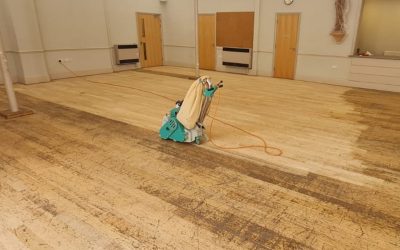
In North London housing stock, timber floors commonly reflect decades of wear, changing heating patterns, historic leaks, and old coverings such as carpet, lino or bitumen-backed materials. Yet once those layers are removed and the floor is sanded through a professional grit sequence, the boards underneath can improve dramatically.
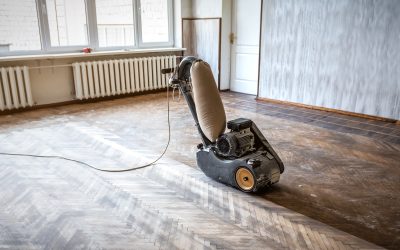
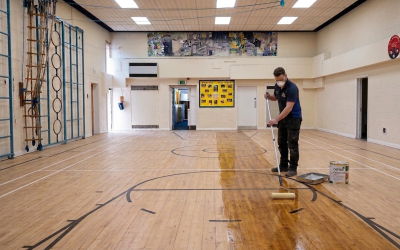
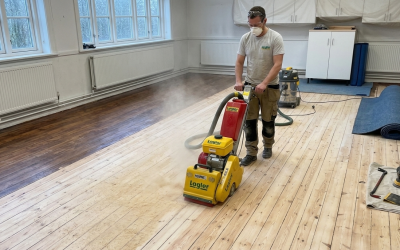
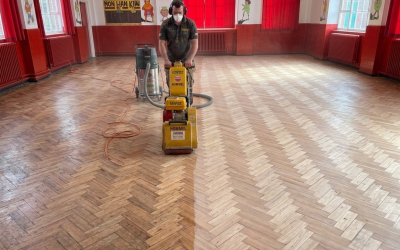
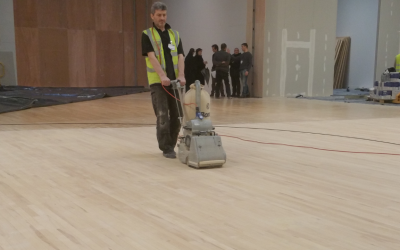
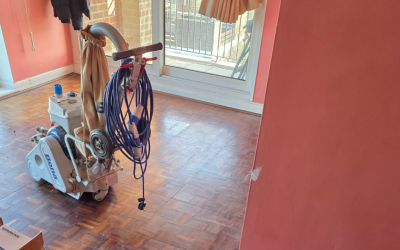
In practical terms, a proper restoration project may include coarse sanding to remove legacy coatings, intermediate smoothing passes, edge work, detail sanding, resin or sliver gap filling where appropriate, isolated board replacement, and finish application matched to the property’s use. This is a measured technical process, not a cosmetic shortcut.
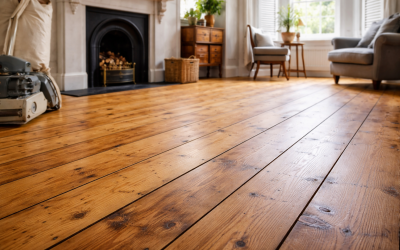
If you want to see the type of visual improvement professional restoration can achieve, the gallery is worth browsing before and after your quote.
Financially, restoration protects more of your budget
Investment is not just about the lowest upfront figure. It is about how much value you retain after the work is complete. When you restore a floorboard system that still has serviceable life left in it, you avoid paying for materials and labour that do not necessarily improve the result in proportion to their cost.
Restoration can also reduce secondary costs. There is often less disruption to skirtings, doors and adjoining floor levels. You are not introducing a completely new floor build-up. In many properties, that means fewer follow-on trades and fewer hidden extras.
It also gives you control. You can choose a straightforward clear lacquer system for value, upgrade to a more robust specification for busy family areas, or choose hardwax oil where you want a more natural, repairable finish. That flexibility helps homeowners spend where it matters rather than overcommitting to full replacement from the outset.
Modern finishes make restored floors far more practical than many owners expect
Some people still imagine restored floors as beautiful but delicate. That is out of date. Modern professional coating systems have changed what a restored floor can handle in everyday use.
For example, Bona Traffic HD is widely specified for demanding environments because of its durability and fast curing profile. Bona’s technical documentation states a drying time of around 2–3 hours, around 80% cure after 24 hours, and full cure after 3 days, with guidance to wait at least 3 days before covering with rugs or placing heavy objects on the surface. That can be highly attractive in busy New Southgate homes where downtime matters. See Bona Traffic HD technical information.
For homeowners who prefer a more natural, low-sheen look with local repairability, hardwax oil systems remain a strong option. Osmo states that Polyx-Oil products typically cure over approximately 10–14 days, even though they dry sooner, which is important for aftercare planning. See Osmo curing guidance.
The point is simple: restored floors are not stuck in the past. With the right specification, they can be practical, durable and easier to live with than many cheaper replacement products.
Restoration can support property value and buyer appeal
Buyers tend to notice original features that have been properly cared for. Well-restored floorboards make rooms feel cleaner, brighter and more cohesive. They photograph better for listings, make spaces feel more premium, and signal that the property has been maintained rather than patched over.
That does not mean every pound spent returns directly in valuation, but it does mean restored timber floors can strengthen the overall presentation of the property. In competitive North London markets, presentation matters. A room with clean, sanded, finished floorboards often feels more complete and better looked after than one with tired coverings or obviously budget replacement materials.
For homeowners planning to sell in the next few years, floor restoration can therefore work as both an enjoyment upgrade and a presentation upgrade.
It is also a better environmental decision in many cases
From a sustainability perspective, restoring existing timber usually makes more sense than discarding it. You keep usable material in service, reduce waste, and avoid the manufacturing and transport impact associated with brand-new flooring products.
That does not remove the need for responsible finishing products and proper ventilation, but it does mean the underlying decision is often less wasteful. The wider wood-flooring sector has long supported maintenance and refurbishment as a valid way to extend floor life rather than replace prematurely. NWFA consumer guidance reflects that long-life approach to wood flooring care.
When restoration may not be the right investment
A trustworthy contractor should also be clear about the limits. Restoration may not be the best option where:
- The boards are heavily compromised by rot or chronic moisture ingress
- There is major subfloor movement or failed joist support
- The floor has been sanded too many times already
- Contamination is too deep for practical recovery
- Large sections are missing and matching becomes uneconomical
That is why an honest site inspection matters. The best investment is not blindly choosing restoration every time. It is choosing restoration when the floor has enough structure and quality left to justify it.
How a professional restoration project adds long-term value
A proper floorboard restoration is not just a sanding visit. It is a sequence of decisions that affect how the floor performs for years afterwards. That includes moisture-content mapping where needed, identifying movement patterns, selecting the correct grit progression, choosing between resin filling and slivers, and matching the finish system to traffic levels.
In a hallway, family kitchen-diner or home office, high wear resistance may be the priority. In a formal front room, appearance and tone may matter most. In bedrooms, homeowners may prioritise low sheen and easy maintenance. Tailoring the specification like this is what turns a good-looking result into a sound investment.
At New Southgate Floor Sanding, the quote process already asks practical questions around floor type, wood type, condition, gap filling and required finish, which is exactly how a restoration-first decision should begin. Request a detailed floor sanding quote here or request a callback if you want to talk through your options first.
The hidden cost of doing nothing
Homeowners sometimes delay restoration because the floor is “still usable”. That can be expensive in its own way. Worn finishes allow more dirt retention, surface drying and staining. Loose boards worsen. Open gaps collect debris and make rooms feel colder. Minor defects become larger repair jobs.
Restoring earlier, before damage escalates, is often the more economical route. You protect the timber while it is still in strong recoverable condition and avoid drifting toward a far more expensive replacement decision later.
FAQs
Is restoring old floorboards cheaper than replacing them?
Often, yes. If the existing boards are sound, restoration avoids many of the additional material and fitting costs that come with full replacement.
Will restored floorboards last?
Yes, provided the boards are structurally sound and the finish is chosen correctly for the room. Good preparation and aftercare make a major difference.
Can badly worn boards in New Southgate still be restored?
Many can. Heavy wear, old coatings and surface staining do not automatically mean the floor needs replacing. A site inspection is the right way to determine that.
Which finish is best after restoration?
That depends on traffic, appearance goals and maintenance expectations. High-traffic lacquers suit busy areas, while hardwax oil appeals to owners wanting a more natural, repairable finish.
How do I get an accurate quote?
The easiest route is to use the online quote form and include photos, floor type, measurements and preferred finish where possible.
Conclusion: in New Southgate, restoration is often the smarter investment
If your floorboards still have structural life in them, restoration is usually the better investment because it protects original character, controls costs more effectively, improves how the home looks and feels, and gives you a finish system suited to real-life use. It is not simply about making old boards look nicer. It is about extending the life of a valuable part of the property in a way that replacement often cannot match pound for pound.
For many New Southgate homeowners, the smartest next step is not guessing from the condition of the surface. It is getting the floor assessed properly. You can start on the New Southgate Floor Sanding homepage, review current options, and book a survey based on the actual condition of your boards rather than assumptions.